
Exterior painting depends on more than having a free day and a can of paint. Temperature, rain, moisture, wind, direct sunlight, and the condition of the surface can all affect how paint applies, dries, and performs.
For homeowners in Alameda, Oakland, Piedmont, and throughout the East Bay, mild weather can provide many opportunities for exterior painting. However, even in a relatively moderate climate, there are times when painting should be delayed. Understanding those conditions can help avoid applying a new coating when the surface or weather is unsuitable.
Avoid Painting When Rain Is Expected
Rain is one of the clearest reasons to postpone exterior painting. The surface needs to be sufficiently dry before paint is applied, and the coating also needs appropriate drying time afterward.
Painting immediately before rain can interfere with the coating before it has had enough time to set. Even after rainfall stops, siding, stucco, trim, and other surfaces may retain moisture.
Homeowners considering Exterior Painting In Alameda, CA should therefore look beyond whether it is raining at that exact moment. Recent weather and the forecast following application can both matter.
When searching for “painters near me” or “house painters near me,” ask how weather conditions are evaluated when scheduling exterior work.
Do Not Paint a Wet or Damp Surface
A surface can be damp even when the weather appears clear. Morning moisture, recent rain, washing, irrigation, and shaded areas can all leave exterior surfaces wet.
Conditions worth checking include:
- Moisture remaining after rain or washing
- Damp shaded walls or trim
- Morning condensation or dew
- Wet wood or other absorbent materials
- Moisture caused by an unresolved property issue
Applying paint before a surface is sufficiently dry may affect adhesion and the performance of the coating.
For more information about preparation, coatings, and the overall painting process, see Professional Painting Services in East Bay, CA.
Avoid Temperatures Outside the Paint’s Recommended Range
Extremely hot or cold conditions can create problems during exterior painting. Rather than relying on one universal temperature rule, painters should follow the application requirements for the specific primer, paint, or coating being used.
Temperature also needs to be considered over the drying period. A comfortable afternoon temperature does not necessarily mean conditions will remain suitable later that evening.
When comparing painting companies near me, homeowners can ask how temperature and product requirements are considered before work begins.
Be Careful With Strong Direct Sunlight
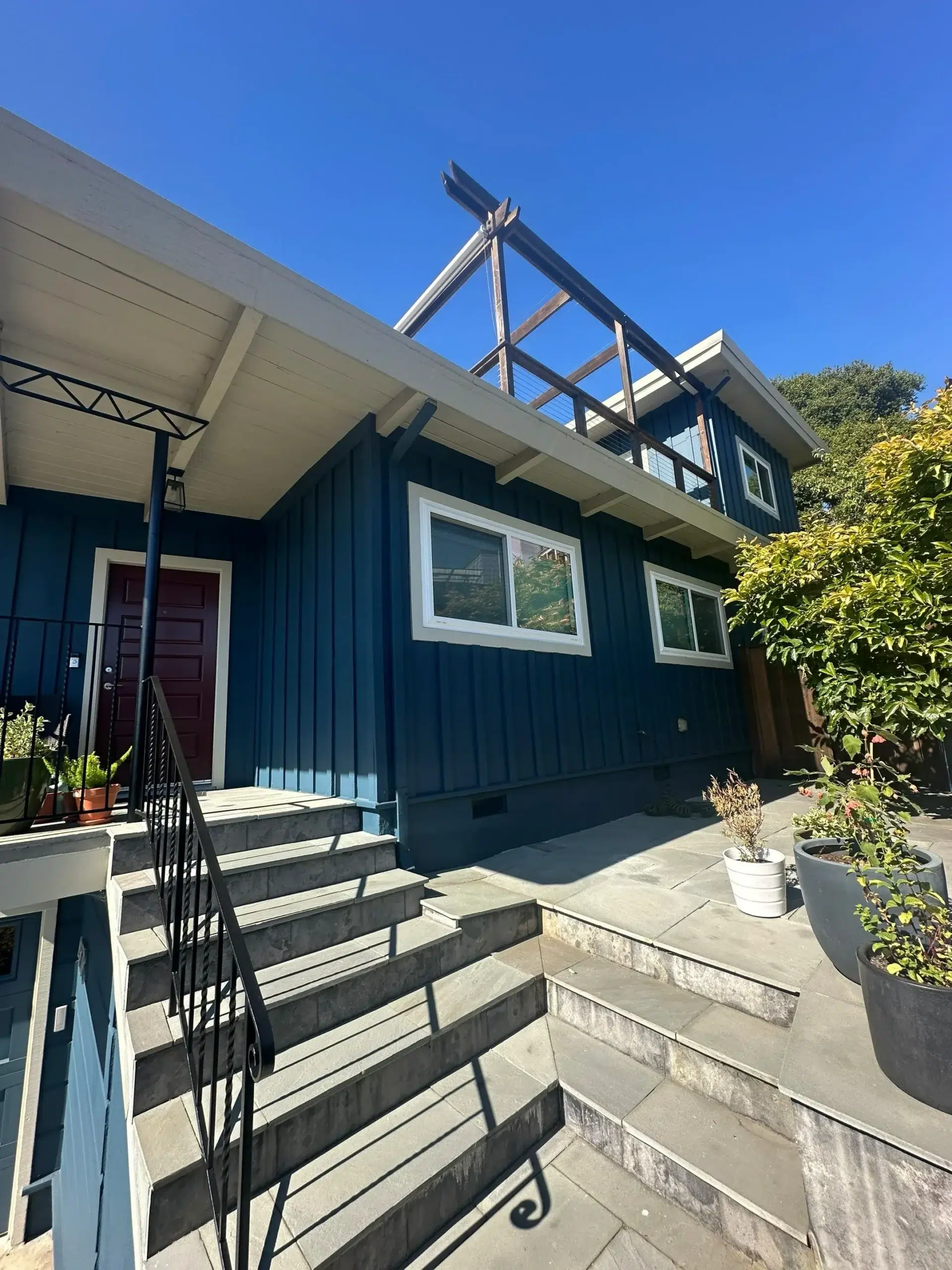 A warm, sunny day may appear ideal for painting, but intense direct sunlight can heat exterior surfaces significantly.
A wall exposed to strong afternoon sun may be much hotter than the surrounding air. Paint applied to an excessively hot surface can dry too quickly, making proper application more difficult.
Experienced building painters near me may plan work around the orientation of the house, moving between shaded and exposed areas as conditions change throughout the day.
This can be particularly relevant for homes in Oakland, Alameda, Piedmont, and other East Bay communities where different sides of a property receive varying levels of sunlight.
Postpone Painting During Strong Winds
Wind can also interfere with exterior painting. Strong or gusty conditions may carry dust, leaves, debris, and other material onto freshly painted surfaces.
Wind may also complicate application and make certain types of exterior work less practical or safe, particularly on elevated areas.
Homeowners researching home painting contractors near me should expect weather conditions to be considered as part of project scheduling rather than assuming exterior work can continue under all circumstances.
Do Not Paint Over a Failing Surface
Sometimes the reason to postpone painting has nothing to do with weather.
If existing paint is peeling, bubbling, or flaking, applying another coat directly over it does not correct the underlying problem. Likewise, damaged siding, deteriorated wood, significant cracks, or moisture issues may require attention before painting begins.
Before exterior work starts, check for:
- Loose or peeling existing paint
- Damaged or deteriorated surfaces
- Significant cracking
- Moisture-related staining
- Failed caulking
- Areas requiring cleaning or repair
A properly prepared surface provides a better foundation for the new coating.
Can Interior Painting Continue When Exterior Conditions Are Poor?
Often, yes. Interior painting is less dependent on outdoor weather because temperature and moisture can usually be controlled more effectively inside the home.
If exterior work must be postponed, an interior project may still be possible. Home painters near me can evaluate whether the indoor conditions are appropriate for the coatings being used.
When comparing interior painting companies near me, ask about ventilation, surface preparation, protection of furniture and flooring, and drying requirements.
Painting companies that provide both interior and exterior services can also help homeowners determine which portions of a larger project can proceed when weather interrupts outdoor work.
Choose Conditions Based on the Project
There is no single perfect day that applies to every exterior painting project. The surface material, coating specifications, temperature, moisture, sunlight, wind, and expected weather all need to be considered together.
Rather than choosing a date based only on the season, evaluate the actual conditions before painting begins.
Planning Exterior Painting in the East Bay?
If you are considering exterior painting in Alameda, Oakland, Piedmont, or another East Bay community, EAG Painting & Decoration can evaluate your property, surface conditions, and project requirements.
Call 510-701-8730 to request a free estimate, or Schedule a Consultation to discuss your painting project.


